






A Digital Marketing Strategist Who Produces
Measurable Business Growth
Scale your business with a system that blends strategic clarity and executional excellence.
Leverage the Power of a Proven Digital Marketing Strategy
Your custom strategy will be built on my Digital Marketing Tree framework, which has a 100% success rate for small businesses and Fortune 100 companies alike.
Bring Your Strategy to Life with Tailored Tactics
With your budget focused on tactics that work for your unique situation and ongoing optimization, you’ll achieve superior returns that improve over time.
Strengthen Your Results with the Right Talent
We’ll scaffold your existing team to improve results, and fold in digital marketing specialists in each area of expertise, ensuring success as new tactics deploy.
Market at Scale with Efficient Systems
With the right tools and processes, your digital marketing will work like a finely tuned machine and grow with your business, amplifying results even more.

“An invaluable key advisor and strategist”
“Husam has the ability to take any company to the next level”
“I’m confident that Husam can provide value for any business”
“His ability to assess a company’s needs and develop relevant strategies for success is unsurpassed”
“We enjoyed the positive results of his deep expertise”





“An invaluable key advisor and strategist”
Your New Digital Marketing Strategy
From first call to full momentum
Let’s Talk
If you’re serious about digital marketing growth and want senior-level marketing leadership with real execution power, let’s talk.
During our initial consultation, I’ll get to know your business, uncover key challenges, and explore where strategic support could unlock real momentum.
If there’s a fit and you’re ready to move forward, we’ll start with a Strategic Assessment and build a roadmap tailored to your goals.
Check Out the Latest Digital Marketing Insights





Explore Proven Strategies for Every Industry
Business Process Outsourcing (BPO)
Win and retain high-value contracts with digital marketing services built for complex sales cycles, multi-stakeholder trust, and long-term growth.
Finance
Attract and convert the right clients with scalable marketing engineered for trust, compliance, and long-cycle growth.
Transportation
Build predictable routes to revenue with digital marketing strategies designed for tight margins, shifting demand, and rapid expansion.
Retail and Manufacturing
Drive consistent demand and predictable growth with digital marketing consulting that aligns sales, operations, and production capacity.



Business Process Outsourcing (BPO)
Contact Centers, Data Capture, Data Entry, Document Processing


Telecom, Technology, Engineering
Telecom Providers, Software Companies, Engineering Firms







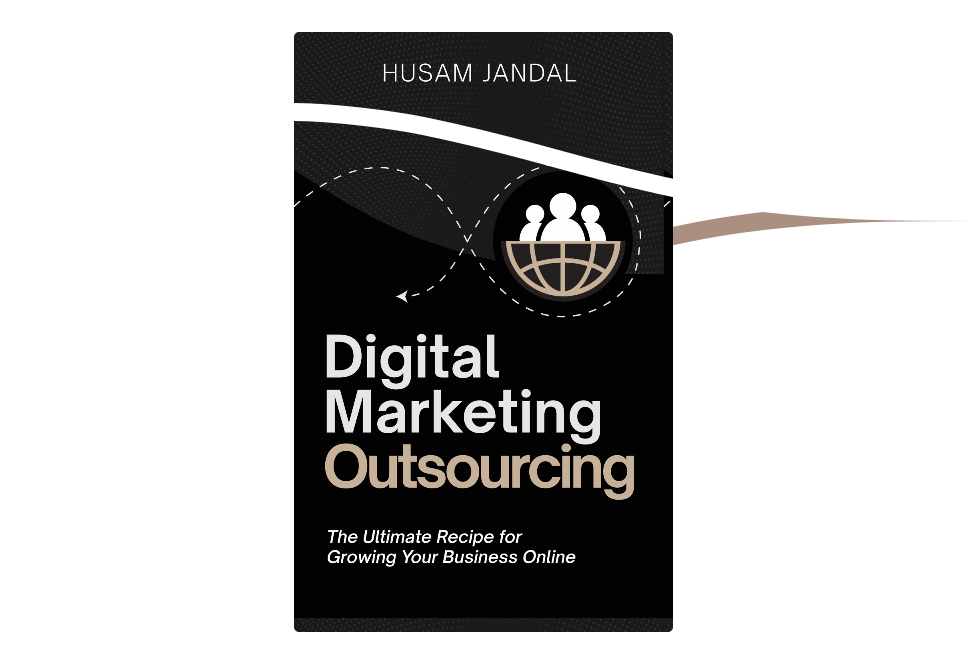
Get your copy of:
Struggling to scale your business while juggling marketing efforts? In Digital Marketing Outsourcing: The Ultimate Playbook for Business Growth, renowned growth strategist Husam Jandal reveals how to leverage external marketing expertise to drive real results without the overhead of an in-house team.
Discover how to:
- Build a results-driven outsourced marketing team
- Cut costs without sacrificing quality
- Avoid the most common mistakes in marketing outsourcing
- Maximize every dollar spent on digital campaigns
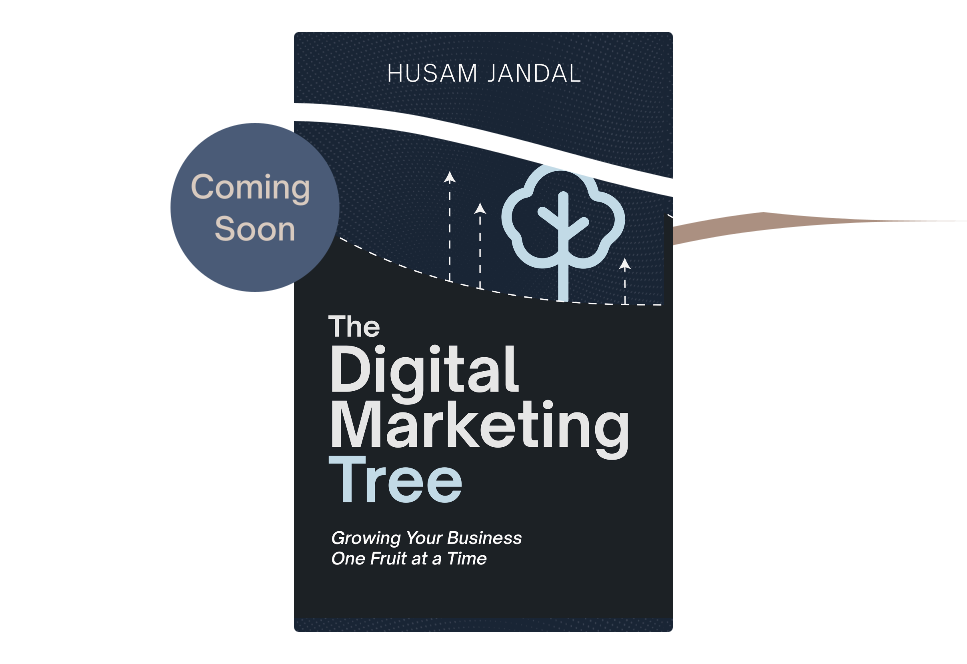
Not sure where to start, but not quite ready to work with a digital marketing specialist? In The Digital Marketing Tree: Growing Your Business One Fruit at a Time, veteran digital marketing consultant Husam Jandal walks you through his proven framework, so you can build a tailored marketing strategy and grow.
Learn how to:
- Prioritize digital marketing efforts for maximum ROI
- Guide your marketing team to achieve business-driven results
- Connect marketing activities to revenue, client lifetime value, and long-term growth
- Scale digital marketing effectively without spreading resources too thin
Insightful Inquiries
Cost and ROI
Q: How much do your digital marketing consulting services cost, and what kind of ROI can I expect?
A: As a digital marketing consultant, I price my services based on the extensive value and experience I bring. The ROI is consistently high, as evidenced by the success of my clients.
Credibility and Track Record
Q: Can you provide examples of success stories or case studies from businesses similar to mine?
A: With years of experience as a digital marketing strategist, I have a track record of success across various business sizes. Please view my testimonials to see what my clients say in their own words.
Relevance to Specific Needs
Q: How do you tailor your services to the unique needs and goals of different businesses?
A: Each strategy I develop as a digital marketing consultant is uniquely tailored to your business's specific needs and goals, ensuring relevance and effectiveness.
Long-Term Commitment
Q: Am I required to commit to a long-term contract for your consulting services?
A: As a consultant focused on long-term growth, I emphasize ongoing relationships and strategic digital marketing planning rather than binding long-term contracts.
Results and Effectiveness
Q: How do you measure and report the results of your consulting work?
A: As a digital marketing strategist, I measure results using clear, agreed-upon metrics, consistently fine-tuning strategies to ensure effectiveness and growth.
Technical Jargon
Q: Will I be able to understand the strategies you propose if I'm not familiar with digital marketing jargon?
A: I communicate complex digital marketing strategies in an accessible manner, ensuring you are fully informed and comfortable with the approach.
Availability and Support
Q: How accessible are you for queries and support during a consulting engagement?
A: I am readily available for consultation and support, ensuring responsiveness to your needs and queries as your dedicated digital marketing consultant.
Customization of Services
Q: Are your digital marketing strategies genuinely customized for each business?
A: My services are highly customized, taking into account your unique business environment and goals, aligning with my role as a digital marketing strategist.
Privacy and Confidentiality
Q: How do you ensure the confidentiality and security of my business information?
A: I uphold the strictest standards of privacy and confidentiality in all aspects of my work as a digital marketing consultant.
Managing Expectations
Q: How do you manage expectations and ensure your services deliver as promised?
A: I set realistic expectations from the outset, focusing on sustainable growth and continuous improvement in my role as a digital marketing strategist.
Cultural and Communication Fit
Q: How do you adapt your consulting approach to fit the culture and communication style of different businesses?
A: As a digital marketing strategy consultant, I adapt my approach to align seamlessly with your company’s culture and communication style, ensuring a partnership that feels like a natural extension of your team.
Technology and Tools
Q: What tools and technology do you use in your consulting services, and are there additional costs for these?
A: I recommend and utilize the latest and most effective tools and technologies as part of my digital marketing consultant services, always aligned with your specific needs and without hidden costs.
Change Management
Q: How do you support businesses implementing changes and managing the transition?
A: As a digital marketing strategy consultant, I guide you through changes, ensuring a smooth transition and effective implementation with minimal disruption to your operations.
Post-Consultation Support
Q: What kind of support or follow-up assistance do you offer after the consultation period ends?
A: My digital marketing consultant services extend beyond the consultation period, ensuring you have ongoing support and guidance for continuous improvement.
Impact on Current Operations
Q: How will your consulting services impact my current business operations?
A: I carefully integrate digital marketing strategies with minimal disruption to your current operations, focusing on enhancement and efficiency.
Results Timeline
Q: How fast can I expect results from your digital marketing strategies?
A: As a digital marketing strategy consultant, I focus on creating impactful strategies that show results in a realistic and sustainable timeframe tailored to your business cycle.
Scope of Services
Q: What specific digital marketing services do you offer, and how do they integrate with my business strategy?
A: My scope as a digital marketing strategy consultant covers the development of overarching marketing strategies, channel-specific strategies, and continuous management for optimal results.
Industry-Specific Experience
Q: Do you have experience in my specific industry, and how does that influence your approach to digital marketing?
A: My extensive experience across various industries allows me to create effective and industry-relevant digital marketing consultant services adapted to your unique market conditions.
Flexibility and Scalability
Q: How flexible are your services as my business needs change or grow?
A: The digital marketing consultant services I offer are organized to be flexible and scalable, adapting to your evolving business needs and stages of growth.
Communication and Reporting
Q: What does communication with you look like during a project, and how often will I receive updates or reports?
A: Open communication is a cornerstone of my digital marketing strategy consultant services. You will receive regular, detailed reports on progress and performance.
Client Involvement
Q: How involved will I or my team need to be in the digital marketing process?
A: Your involvement is critical to tailoring a strategy that fits your vision. As your online marketing consultant, I'll work closely with your team to ensure our efforts are synergistic and aligned.
Customization vs. Frameworks
Q: How do you balance between customizing strategies for my business and using proven marketing frameworks?
A: Balancing customized solutions with proven frameworks is a hallmark of effective digital marketing consultancy. I tailor these frameworks to fit your unique business needs.
Handling Competition
Q: How will your services help me stand out against my competitors?
A: As an experienced online marketing consultant, I craft strategies highlighting your unique selling propositions, setting you apart in the marketplace.
Ethical Practices
Q: Can you ensure your digital marketing practices are ethical and compliant with industry standards
A: Ethical practices are the foundation of my consultancy. I ensure all strategies are compliant with the latest industry standards.
Provided Tools and Resources
Q: Do you provide or recommend tools and resources for ongoing digital marketing efforts?
A: I recommend essential tools and resources for your growth, ensuring you have the best solutions at your disposal.
Success Measurement
Q: Beyond revenue, how else do you measure the success of your digital marketing efforts?
A: Success is multi-faceted, encompassing market share, brand recognition, customer engagement, and more. I establish metrics that reflect the full spectrum of your digital footprint.
Crisis Management
Q: How do you handle potential digital marketing crises or negative publicity?
A: Proactive crisis management is crucial. I prepare strategies to address and mitigate any adverse incidents online swiftly.
Onboarding Process
Q: What is the onboarding process like when starting with your consulting services?
A: The onboarding process is thorough yet streamlined, ensuring we're aligned on objectives and strategies from the start.
Training and Knowledge Transfer
Q: Do you provide training or knowledge transfer to my team as part of your services?
A: Empowering your team with knowledge is part of my commitment to sustainable growth and self-sufficiency.
Partnerships and Networking
Q: Do your services facilitate partnerships or networking opportunities relevant to my business?
A: Identifying and facilitating strategic partnerships is part of my comprehensive service, expanding your network and opportunities.