 Trying to build a future-proof business strategy? Whether market shifts are making you uneasy or your business has reached a level of success that you want to protect, you’re in good company. Your proactiveness is already setting the stage for long-term business success. Below, we’ll cover core strategies to guide you along the way.
Embrace Experimentation, Innovation, Adaptability, and Change
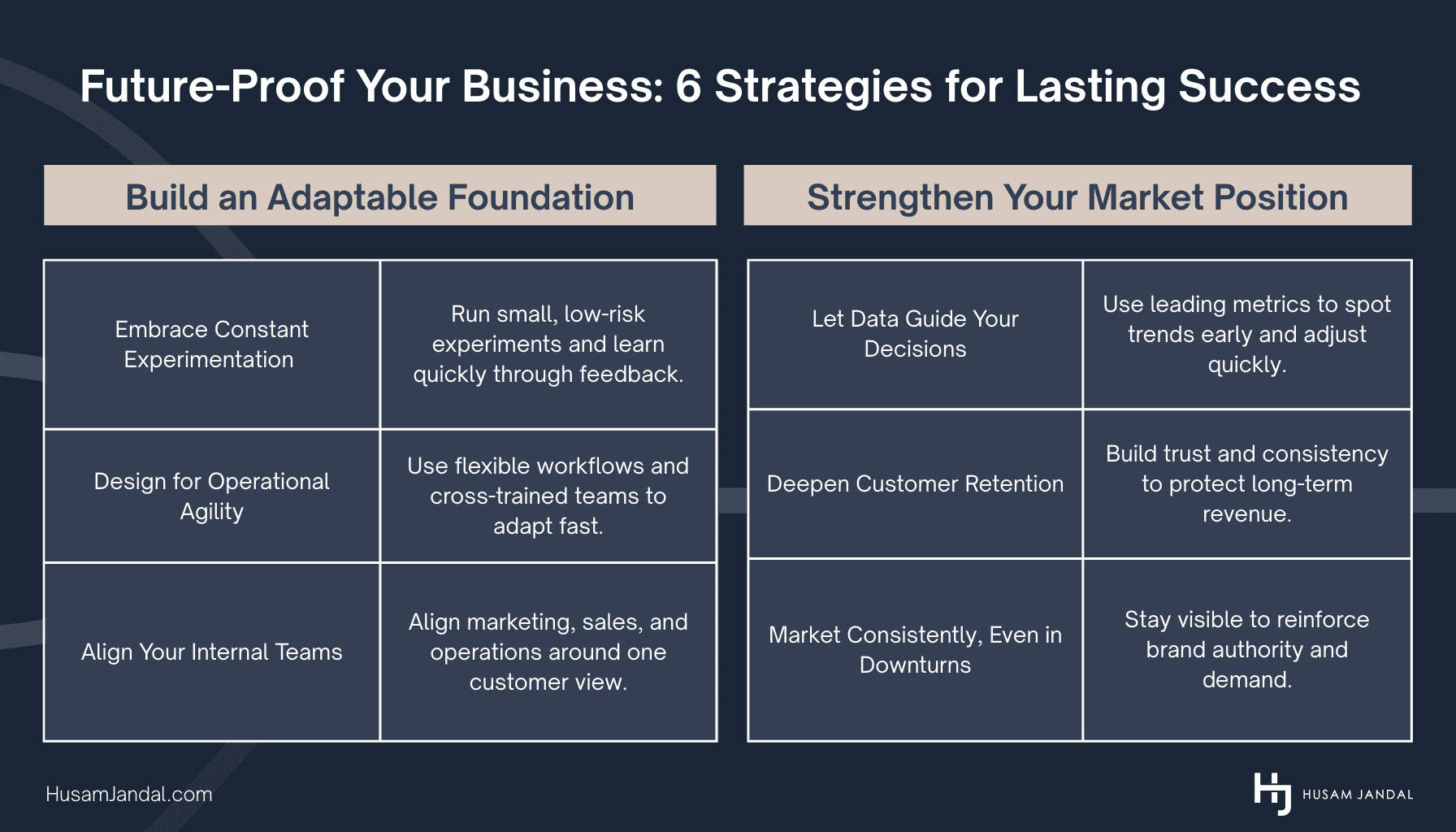
Your ability to position your business for long-term success hinges on how comfortable you are with movement. Markets shift. Customer expectations evolve. Technology changes at a pace that surprises even the people building it. When you treat experimentation and innovation as part of daily operations rather than a special project, you give your business room to grow in any environment.
Build a Culture That Welcomes Experimentation
Experimentation gives you insight into what works before you make big commitments. Large companies do this at scale through formal testing programs, but even a small business can take practical steps.
- Small, Low Risk Tests: Use A/B testing to ensure you’re always leveraging the most effective methods, or run small pilots before investing heavily.
- Clear Learning Goals: Treat experiments as tools for learning rather than as tools for validating assumptions.
- Regular Review Cycles: Look at results on a consistent schedule so ideas do not disappear into the background.
Use Innovation to Stay Competitive
When people talk about innovation, it’s normally big breakthroughs that come to mind. In practice, however, it’s often incremental, yet consistent improvements that move the needle and lead to considerable gains over time.
- Process Improvements: Be on the lookout for new methods and tools that will allow you to work more efficiently, scale, or improve output.
- Customer-Led Changes: Listen closely to what customers are asking for. The more you meet their needs and the less friction they experience, the less likely they are to explore other options, even when there are hiccups in your service or it may save them money.
- Technology Adoption: When new tools offer genuine value, adopt them early enough to gain an advantage but late enough that the technology is stable.
- Partnerships and Collaborations: Anytime you add something new to the mix, it shakes things up. For instance, collaborating with other brands may encourage you to try new marketing methods, test products, or connect with different audiences.
Strengthen Adaptability Across Your Organization
Adaptability is your ability to respond quickly when conditions change. This trait is key when you need to pivot through supply chain disruptions, labor shifts, and economic uncertainty.
- Flexible Planning: Keep annual plans but build quarterly adjustments into your workflow.
- Cross-Training: When employees understand more than one role, your business can shift resources quickly or fill gaps as needed.
- Scenario Planning: Consider multiple versions of the future. This allows you to move faster when one of those scenarios begins to take shape.
Normalize Change as a Strategic Advantage
The most future-ready businesses see change as routine. They prepare for it, train for it, and benefit from it.
- Clear Communication: Explain why shifts occur and how each decision supports long-term stability. This transparency strengthens trust during uncertain periods.
- Timely Decision Making: Businesses that act early often gain market share and maintain it.
- Continuous Learning: Encourage your team to stay current with industry trends. Even a few hours each month can uncover new opportunities.
Maintain Operational Flexibility
Operational flexibility gives your business room to adjust when market conditions shift. When you build systems that can expand, contract, or pivot without disrupting daily operations, you protect your long-term stability. Flexibility also improves your ability to act on new opportunities before competitors notice them.
Design Processes That Can Shift Quickly
Flexible processes help your business adapt to changes in customer demand, supply chain conditions, or costs. You do not need a complete overhaul to make progress. Small adjustments create meaningful leverage.
- Modular Workflows: Build processes in smaller steps so you can adjust one part without rebuilding the entire operation.
- Standard Operating Procedures: Document core steps so your team can make consistent decisions even when conditions change.
- Clear Decision Paths: When everyone knows who can approve changes, the business moves faster during periods of uncertainty.
Build a Workforce That Can Move as Needed
Your people play a central role in operational flexibility. When your team can shift responsibilities or workflows without confusion, you gain a strategic advantage.
- Cross-Training: Cross-training plays a role here, too, as employees who understand multiple functions help fill gaps during turnover, seasonal spikes, or unexpected disruptions.
- Flexible Scheduling: During peak periods or shortages, businesses with flexible scheduling often maintain higher service levels.
- Skill Development: Encourage employees to learn skills that support future needs.
Strengthen Supply Chain and Resource Flexibility

Diversifying your supply chain and resource planning reduces risk and keeps your operations stable during uncertainty.
- Multiple Vendor Options: Businesses with more than one supplier for critical materials recover faster from disruptions.
- Inventory Visibility: Use tools that help you understand inventory levels in real time. This allows you to anticipate shortages and react early.
- Strategic Outsourcing: Consider outsourcing roles that require expertise but don’t necessarily need a seat in your office. Working with specialized firms or freelancers can help you reduce fixed overhead and scale operations up or down with demand.
Use Technology to Improve Agility
Technology plays a large role in supporting fast operational shifts. Modern systems give you clearer data, faster communication, and better forecasting to ensure your business stays agile.
- Cloud-Based Tools: With cloud-based systems, your team can access information from anywhere, which can boost productivity and allow you to hire from a broader talent pool.
- Automation: Up to 70 percent of work can be automated, according to McKinsey. Explore ways to leverage tech to free up time for strategy, customer-facing needs, and other high-level tasks that require a human touch.
- Real-Time Analytics: When you can assess your performance quickly, you make more informed decisions without hesitation.
Know Your Data
Future-proofing your business begins with clarity. Data helps you see trends early, understand your customers more deeply, and adjust your operations before small issues become larger problems.
Start with Clear, Actionable Metrics
Focus on the metrics that can help guide your daily decisions.
- Key Performance Indicators: Identify the specific numbers that reflect the health of your business, client lifetime value, such as customer acquisition cost, or gross margin behavior.
- Leading Indicators: Track early signals that show where your business may be heading. For example, changes in website engagement can help you anticipate shifts in customer interest before sales patterns change.
Use Data to Guide Operational Decisions
As mentioned earlier, operational flexibility improves your long-term stability. Data shows you where to adjust and where to stay the course.
- Capacity Tracking: Monitor fulfillment times, staffing needs, and workflow performance so you know when to scale or streamline.
- Cost Insights: Review your cost structure consistently and watch for patterns that reveal opportunities to reduce waste or reallocate resources.
- Predictive Patterns: Use historical trends to anticipate high-volume periods, supply needs, or shifts in customer demand.
Strengthen Customer Understanding Through Data
The more you understand your customers, the easier it becomes to serve them well. Data gives you a clear view of what they value, how they behave, and where their needs are heading.
- Segmentation: Group customers based on shared characteristics, purchasing behavior, or engagement style. This helps you tailor offers, communication, and service models.
- Engagement Metrics: Look at how customers interact with your digital assets, such as educational materials, emails, or landing pages. These behaviors help you refine your approach.
- Lifetime Value Trends: Study groups of customers who deliver consistent value over time. This helps you understand which patterns lead to long-term loyalty.
Make Data Accessible Across Your Team
Sharing data with your team helps ensure you’re all working toward the same goals and identify when activities are creating progress, so they’re more likely to support initiatives and take ownership of success.
- Centralized Reporting: Keep important reports in one place so your team works from the same information.
- Simple Visuals: Present trends with charts or summaries that show direction at a glance.
- Regular Reviews: Hold predictable check-ins, so your team stays aligned and can act on new insights quickly.
Use Data to Strengthen Your Marketing Performance
Your marketing data provides insight into how people find your business and what motivates them to take action. When you understand these patterns, you direct your time and budget more effectively.
- Attribution Insights: Study which channels create the strongest leads or sales. A balanced mix of search visibility, paid placement, and email nurturing often produces stronger results than relying on a single channel.
- Conversion Trends: Review performance on your landing pages or forms. Even small changes in layout, clarity, or messaging can lift conversions.
- Audience Signals: Track search terms, page performance, and engagement trends. These signals help you create content or campaigns that reflect what your audience is already looking for.
Build a Habit of Continuous Data Review
Regular data reviews help you avoid surprises and keep your strategy aligned with real behavior
- Weekly Checkpoints: Review short-term performance indicators to stay connected to daily movement.
- Monthly Deep Dives: Look at broader patterns to understand what is shifting and why.
- Quarterly Adjustments: Revisit your goals and strategy based on the story your data is telling.
Create Alignment Between Marketing, Sales, and Operations
Your business becomes much more resilient when marketing, sales, and operations work together as a single system, as alignment strengthens growth, improves efficiency, and helps your business adapt faster when market conditions shift.
Start with a Shared Understanding of Your Customer
When everyone shares a vision of who your customers are, your messaging, service delivery, and offerings come together to create a seamless experience that keeps customers happy and your business strong.
- Unified Customer Profiles: Build and share customer personas that include needs, buying triggers, objections, and preferred communication styles. This gives every team a single reference point.
- Consistent Language: Use the same terminology across marketing materials, sales conversations, and service delivery. This prevents confusion and keeps the customer experience seamless.
- Shared Success Definitions: Agree on what a high-quality lead looks like and what a successful conversion includes, so every team works toward the same outcome.
Create a Workflow That Moves Customers Smoothly Through the Journey
Your customer journey should feel coordinated. Each team member and department may play a distinct role, but your customer should experience it as a single cohesive process.
- Clear Handoffs: Document when a lead moves from marketing to sales and from sales to operations. This reduces missed steps and ensures your customer continues to feel supported.
- Service Level Expectations: Agree on how quickly each team responds at each stage of the journey. This strengthens trust and keeps communication predictable.
- Feedback Loops: Build simple ways for teams to share what they learn. For example, sales conversations often reveal objections that help marketing refine messaging, while operations feedback helps sales set realistic expectations.
Align Your Strategic Goals Across Teams
Your marketing, sales, and operations teams support different parts of the business, but their goals should reinforce each other. Strategic alignment creates the consistency needed to thrive in a changing market.
- Shared Revenue Targets: Create a unified target and let each team see how their work contributes to it. This increases accountability and clarity.
- Complementary KPIs: Ensure that marketing, sales, and operations measure success in ways that support the same growth trajectory.
- Quarterly Joint Planning: Review upcoming initiatives together so campaigns, sales strategies, and operational capacity remain aligned.
Connect Internal Communication and Collaboration
Strong communication breaks down barriers that might otherwise leave teams disconnected or siloed and strengthens performance across the entire business.
- Shared Project Spaces: Keep campaign plans, service updates, and process documentation in a unified location.
- Simple Communication Rhythms: Hold short cross-functional check-ins so each team stays aware of what the others are doing.
- Role Clarity: Make sure every person understands what they own, what they influence, and how their work supports the larger strategy.
Reinforce Alignment Through Your Customer Experience
Your customer will feel the impact of alignment more than anyone inside your company. When marketing, sales, and operations deliver a coordinated experience, you create momentum that compounds over time.
- Consistent Messaging: Ensure your marketing promises match what sales communicates and what operations delivers. This builds trust.
- Service Follow-Through: When operations delivers on what marketing and sales introduce, customers gain confidence in your process.
- Continuous Improvement: Use direct customer feedback to refine the journey across all three teams.
Build a Strong and Sustainable Demand Engine
Your demand engine is the system that attracts your ideal customers, educates them, and prepares them to engage with your sales team. Think of it as a repeatable, structured process that creates steady interest in your business and brings all marketing activities into alignment. The Digital Marketing Tree approach is a prime example of what this looks like in action. When you have a system like this in place, your growth is more predictable, your sales team is more effective, and your long-term stability improves.
Build a Content Ecosystem That Supports Every Stage of the Journey
Your audience looks for information at different points in their decision-making process. A sustainable demand engine meets them with content at each stage to provide clarity.
- Educational Resources: Create evergreen articles, guides, or videos that help your audience solve problems and understand their options. This positions your business as a trusted source of information.
- Comparison and Evaluation Tools: Use checklists, templates, or case studies that help buyers assess fit. These tools support more confident decisions.
- Conversion-Oriented Assets: Build landing pages and calls to action that help qualified buyers take the next step without confusion.
Strengthen Lead Quality Through Targeted Marketing
When your outreach reflects how your audience actually searches, learns, and evaluates options, your demand engine strengthens. Digital channels give you the ability to refine this with precision.
- Search Visibility: Strengthen your presence in search engines so your audience can find you as they explore solutions.
- Targeted Campaigns: Use paid placement or retargeting to reach people who have already shown interest to attract audiences with stronger intent.
- Audience Insights: Review engagement data to see which messages resonate. As touched on earlier, this helps you refine your targeting and improve lead quality.
Maintain Momentum with Consistent Nurturing
Your audience may not be ready to buy when they first discover your business. A sustainable demand engine nurtures interest over time without overwhelming your prospects. It can also turn early curiosity and budding relationships into long-term demand that sustains your business even in lean or uncertain times.
- Email Nurturing: Send helpful resources that match their stage in the journey.
- Retargeting: Stay visible by presenting content that aligns with what they have already viewed.
- Regular Value Touchpoints: Maintain contact in a way that feels supportive, not intrusive, so your business stays top of mind.
Strengthen Your Digital Visibility and Brand Authority
Businesses often focus on trying to win the quick sale. There are avenues in digital marketing that offer rapid results, such as pay-per-click advertising, and they certainly have a place in any cohesive strategy. However, pay-per-click stops providing results the instant you pause your ads. Even long-term strategies like SEO, which consistently deliver leads, can dry up when an algorithm shifts. Bear in mind, the Google Search algorithm is updated thousands of times each year, as Search Engine Journal reports. While most occur unnoticed, major updates can impact lead quality and quantity overnight. In order to ensure you continue to receive leads when the market or an algorithm shifts, you must ensure your brand is recognizable, that you’re well represented online, and that you have a strong reputation.
Make Your Brand Recognizable
When external systems create disruption, brand recognition can create continuity. People know your name and understand what you do will continue seeking you out. The buzz they create can also help ensure new people find you, even if common discovery channels become less reliable.
- Clear Positioning: Share a simple explanation of who you help and what you deliver. When your message is clear, customers retain it more easily and return to you during uncertain times.
- Consistent Messaging: Reinforce the same themes across your website, social channels, and educational materials so your brand stays familiar through market changes.
- Strong Visual Identity: A unified look and feel helps your business stand out, which becomes especially important when search results or ad placements fluctuate.
Strengthen Your Website
Your website is often the only digital asset you control fully. It can act as a stabilizing force when other channels become unpredictable.
- Clear Structure: Make it easy for visitors to find answers. This supports lead flow even during periods of low demand.
- Educational Content: Share in-depth resources that help customers solve problems. This positions your website as a destination, not a dependency of search rankings.
- Conversion Pathways: Build predictable calls to action so your website continues generating leads without relying on a single traffic source.
Develop Search Visibility That Holds Up Across Algorithm Changes
Search visibility is powerful, but it is never guaranteed. Updates can shift rankings or alter buyer behavior. A future-proof approach builds visibility with depth, breadth, and relevance so you stay discoverable through fluctuations.
- High Value Content: Write resources that answer real questions in meaningful detail. This type of content tends to remain stable through algorithm cycles because it reflects genuine expertise.
- Topical Breadth: Cover a full range of topics your audience cares about, so you are not dependent on a single ranking to keep your pipeline healthy.
- Audience Alignment: Use customer questions and performance data to guide your content so it remains relevant even as search patterns evolve.
Build Brand Authority
Authority protects your business when advertising becomes competitive, new rivals appear, or customer trust becomes harder to earn. When you are known as a knowledgeable, reliable source, customers feel safer selecting your business regardless of how they discovered you.
- Brand Storytelling: Humanize your brand with storytelling. Not only will it help improve recall, but it’s been shown to boost conversions by 30 percent, per the Delhi School of Internet Marketing.
- Thought Leadership: Offer relevant insights that help your audience navigate challenges. When you teach consistently, customers view you as a guide.
- Case Studies: Share authentic examples that demonstrate outcomes. Strong proof increases confidence even during cautious market periods.
- Public Presence: Appear on podcasts, publish articles, or contribute commentary to reinforce your expertise across different platforms.
Maintain a Presence on the Channels That Matter Most to Your Buyers
Visibility across multiple touchpoints protects you when one platform becomes less effective. If your brand appears consistently in the places your audience uses daily, you continue earning attention even when algorithms change behind the scenes. Multichannel visibility reduces risk by preventing overreliance on any single source of traffic.
- Selective Channel Strategy: Focus on the platforms that influence your customer’s journey so your visibility remains relevant long-term.
- Reliable Posting Cadence: Consistency strengthens your brand’s staying power during quiet market periods, building trust through repetition.
- Responsive Engagement: When your brand feels active and approachable, customers stay connected and return more naturally.
Deepen Customer Retention
Retention protects your revenue during slow cycles, strengthens your forecasting accuracy, and reduces the pressure to constantly replace churn with new leads, fortifying your business against market shifts and during times of uncertainty.
Strengthen Relationships
Customers who feel connected to your business continue working with you even when budgets tighten or new competitors appear. Strong relationships reduce vulnerability to outside pressures.
- Consistent Communication: Stay in touch after the sale with helpful updates, check-ins, or resources. This reinforces your role as a partner rather than a transaction.
- Customer Understanding: Learn the priorities, challenges, and goals of each of your personas, so your service aligns with what they value most.
- Personalized Support: Tailor your interactions based on past conversations or performance data. This helps customers feel recognized and appreciated.
- Customer Care Programs: Rather than waiting for people to reach out to your customer service when they have issues, develop a customer care program that helps them maximize the value of your offerings and reduces friction from day one.
Deliver a Reliable Experience
Future-proofing depends on trust. When customers trust your consistency, they return even when market conditions cause hesitation.
- Predictable Service Quality: Document your processes so your delivery remains consistent across fluctuations in demand or staffing.
- Clear Expectations: Set transparent timelines and outcomes so customers never feel unsure about what comes next.
- Quality Control Systems: Regularly review performance and correct issues quickly so you maintain reliability over time.
Use Feedback Loops to Improve Continuously

Retention grows when customers feel heard. A strong feedback system, paired with a continuous-improvement mindset, helps your business stay ahead of issues, adapt quickly, and remain relevant as customer expectations change.
- Structured Feedback Channels: Request input through surveys, post project reviews, or direct check-ins at predictable intervals.
- Meaningful Follow Through: Respond to concerns promptly and communicate what changes you are making. This demonstrates accountability.
- Insight Driven Improvements: Use feedback to update your processes, resources, or communication so your service evolves with customer needs.
Expand Value for Existing Customers
When you offer ongoing value, customers continue choosing your business instead of exploring alternatives. This stabilizes your revenue and reduces your acquisition costs.
- Complementary Services: Introduce complementary services and additional solutions that align with their goals so they can grow with you.
- Sticky Benefits: Offer sticky benefits that integrate your offerings into everyday life and reminds customers of the value you bring. A really strong sticky benefit can even make the idea of leaving your company unfathomable or uncomfortable.
- Proactive Recommendations: Watch for opportunities to help customers improve performance or reduce risk and bring those insights to them directly.
Build Advocacy
Customers who trust your business not only stay but speak up on your behalf. Advocacy helps your business stay competitive even if external visibility channels shift.
- Review Requests: Ask satisfied customers to share their experiences on platforms your audience relies on.
- Referral Incentives: Consider small gestures that encourage customers to introduce your business to others.
Maintain Marketing Consistency, Even During Uncertain Times
When uncertainty rises, many businesses react by cutting budgets or pausing their marketing. This might create short-term savings, but it also disrupts visibility, weakens demand, and slows momentum. Consistent marketing is one of the most effective ways to future-proof your business. It keeps your pipeline active, stabilizes customer trust, and helps your business rebound faster when conditions improve.
Keep Your Brand Visible
When you reduce marketing activity, your business becomes less visible at the exact moment competitors may be increasing their efforts. Visibility is easier to maintain than it is to rebuild.
- Active Presence: Continue showing up in the channels your audience uses so they do not forget your brand during long decision cycles.
- Steady Communication: Share updates, resources, or guidance to reassure customers that your business remains strong and engaged.
- Reinforced Recognition: Maintain your normal rhythm so your brand stays familiar. Familiar brands recover faster when markets stabilize.
Preserve Demand Generation
A consistent pipeline helps you avoid the steep revenue drop that often follows prolonged marketing pauses.
- Sustainable Cadence: Choose a pace you can maintain. Interruptions in marketing create a cycle that is difficult to break. Leads decline, revenue softens, and the business delays reactivating efforts because resources feel constrained. Staying consistent prevents this pattern.
- Balanced Channel Mix: Spread your efforts across search, email, and social channels so you are not dependent on one source of demand.
- Reliable Lead Nurturing: Continue sending valuable content to prospects. This keeps them engaged until they are ready to move forward.
Support Customer Confidence Through Clear, Predictable Messaging
Customers pay more attention to stability during uncertain times. When your communication is steady, you demonstrate reliability, which strengthens long-term loyalty.
- Reassuring Updates: Share insights that help customers navigate their own challenges. This positions your business as a calm, knowledgeable partner.
- Aligned Messaging: Keep your tone and themes consistent so customers feel anchored.
- Value Driven Content: Provide information that helps customers make better decisions or address emerging issues.
Protect Your Competitive Position
When competitors cut their marketing, the field becomes quieter. Those who remain active gain an advantage that often lasts long after conditions normalize. Because of this, savvy business leaders often scale marketing investments to capitalize on opportunities.
- Increased Share of Voice: Your content stands out more easily when fewer brands are communicating.
- Faster Recovery: Businesses that maintain momentum typically rebound earlier because they do not need to rebuild demand from scratch.
- Stronger Trust: Customers view consistent brands as more stable, which increases conversions during and after periods of uncertainty.
Get Help Strengthening Your Long-Term Business Success
Once small and midsized businesses start seeing consistent success, discussions naturally turn to ensuring the business stays protected when conditions shift. As a digital marketing consultant with a background in business, I build future-proofing into the overall strategy, ensuring growth compounds over time and the company remains strong even when external forces create pressure. If you’d like to explore what this might look like for your business, connect with me for a complimentary consultation.
FAQs on Building a Future-Proof Business Strategy
What are the five Ps of business strategy?
The five Ps refer to plan, ploy, pattern, position, and perspective. They help you examine strategy from multiple angles, including long-term direction, competitive approach, consistent behaviors, market positioning, and internal mindset. When you use all five, you create a clearer, more resilient strategic foundation.
What does adapting to market change mean?
Adapting to market change means adjusting your business approach as customer behavior, economic conditions, and industry trends evolve. You refine your operations, update your offerings, and modify your marketing so your business continues meeting customer needs. This flexibility helps you stay competitive during both stable and uncertain periods.
How do you adapt to market changes?
You adapt to market changes by monitoring data, listening to customers, reviewing performance trends, and adjusting your operations or offerings quickly. You strengthen flexibility across your team, refine your messaging, and update your processes so your business stays relevant. This responsiveness helps you maintain momentum even when conditions shift.
What are the most important business resilience strategies?
Key resilience strategies include diversifying your revenue streams, strengthening cash flow, maintaining consistent marketing, supporting customer retention, and building operational flexibility. You also invest in data insights, strong leadership communication, and steady brand visibility. Together, these strategies help your business remain stable and competitive through uncertain conditions.
What are the pillars of business resiliency?
Common pillars include financial readiness, operational flexibility, strong customer relationships, technology that supports adaptability, and leadership that responds quickly to change. These pillars work together to help your business handle disruptions, maintain service quality, and recover faster during challenging periods.
How do you develop a sustainable competitive advantage?
You create a sustainable advantage by offering value that your competitors struggle to match. This may include specialized expertise, a distinct customer experience, unique processes, or strong brand authority. You refine these strengths over time, supported by data and ongoing innovation, to keep your advantage relevant as your market evolves.
How do I strengthen strategic foresight in leadership?
Strengthen strategic foresight by tracking industry trends, analyzing performance data, studying customer behavior, and exploring multiple future scenarios. You hold regular planning sessions, encourage diverse viewpoints, and invest in learning. This helps you anticipate shifts earlier and prepare your business for long-term stability and opportunity.
How can marketing help future-proof my business?
Marketing helps future-proof your business by keeping your brand visible, strengthening demand, and reinforcing customer trust even when conditions change. Consistent marketing creates recognition, supports retention, and protects your pipeline from overreliance on a single channel. This stability makes your business more resilient in shifting markets.